Adjustable Bench vs Flat Bench: Which Is the Better Home Gym Investment?
A bench looks simple, but it has a big impact on how you train. If you are building a home gym, one of the first questions is whether to buy a flat bench or an adjustable bench. Both have value. Both can work well. The right choice depends on how you train, how much space you have, and whether you want one bench to cover more exercises.
For most home gym owners, this decision comes down to range versus simplicity.
What a flat bench does well
A flat bench gives you one job and does it well. It works for flat bench press, dumbbell press, rows, seated work, step-ups, and basic support work. It is easy to move, easy to store, and easy to set up. There are fewer moving parts, which means fewer things to adjust before each set.
Many lifters also like the feel of a flat bench for barbell benching because it tends to feel planted and consistent. If your training is focused on flat pressing and basic dumbbell work, a flat bench may cover what you need.
This is part of why flat benches are common in strength setups. They are simple and direct.
Where an adjustable bench gives you more
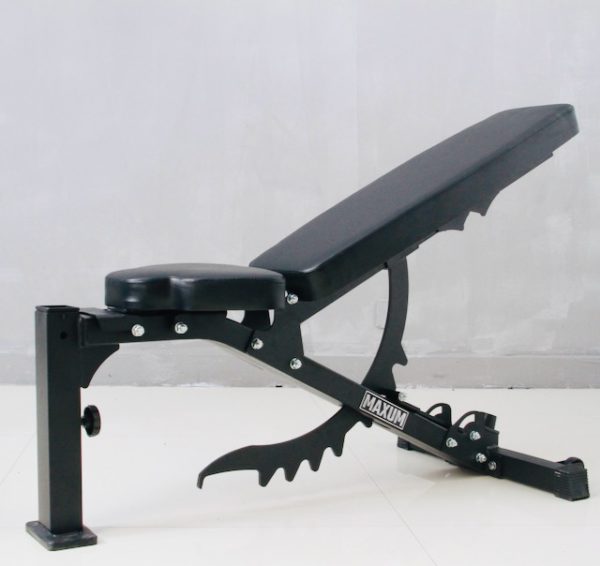
An adjustable bench opens up more training options in the same footprint.
With incline settings, you can add incline press, incline dumbbell work, shoulder press, seated curls, supported rows, and other movements that are harder to do well on a flat bench alone. That matters in a home gym where every piece of equipment needs to earn its place.
If you are not planning to own multiple benches, an adjustable bench often gives you more value because it supports more exercise variety.
That does not just help beginners. It helps anyone who wants to do more with less space.
Exercise range matters in a home gym
In a commercial gym, you can move from station to station. At home, your equipment list is smaller. That changes the buying decision.
A flat bench supports core lifts, but an adjustable bench can cover flat, incline, and upright work in one piece. That makes it useful for people training chest, shoulders, arms, and back with dumbbells, barbells, or a Smith machine.
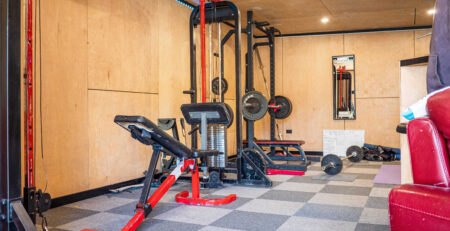
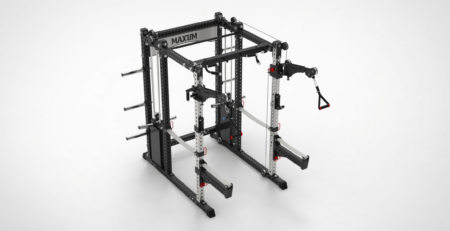
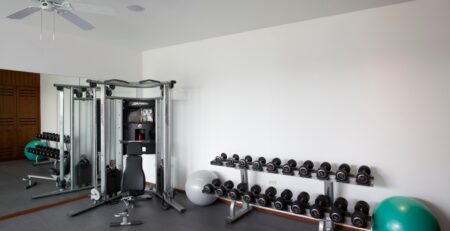
If your setup includes a functional trainer or Smith machine, an adjustable bench often works even harder. You can shift bench angle to change cable pressing, seated pulls, incline flies, and supported work without needing another station.
That kind of flexibility is often what makes an adjustable bench the better long-term buy.
Stability versus versatility
This is where the trade-off becomes clear.
A flat bench usually wins on simplicity. It is often easier to move into position, and many lifters like the fixed feel during pressing.
An adjustable bench wins on versatility. One bench can support more angles and more training styles. For many buyers, that is more useful over time than having a bench that only does one thing.
The question is not whether one bench is better in every case. The question is what matters more in your setup.
If you already have several pieces of equipment and mainly care about flat pressing, a flat bench can make sense.
If you want one bench to handle more of your program, adjustable usually gives you more.
Think about how you train now and later
A lot of people shop for a bench based only on what they are doing today. That can lead to a short-term choice.
Maybe right now you only bench press and do a few rows. But six months from now, you may want incline pressing, seated shoulder work, or more dumbbell variation. If that is likely, it helps to buy with that in mind now.
This is why adjustable benches often end up being the smarter investment for home gym owners. They leave room for the training to evolve.
That matters if you want your gym to grow with you instead of forcing another upgrade later.
Space and storage also matter
Flat benches usually take up a little less room and can be easier to move around. If your training area is tight and you need the simplest setup possible, that can be a factor.
But in many home gyms, the difference in space is not big enough to outweigh the added function of an adjustable bench. If one piece can replace the need for multiple setup options, that is often the better use of floor space.
Think in terms of what the bench lets you do, not just where it sits.
Which bench is the smarter investment?
If your goal is a bench for flat pressing only, a flat bench can do the job well. If your goal is to get more training options from one purchase, an adjustable bench is usually the smarter investment.
It supports more exercises. It works well with racks, Smith machines, and cable systems. It helps you get more from the space you already have. For many home gym owners, that makes it the better choice over time.
The best bench is the one that fits how you train and what your setup needs to do. If you want simple, go flat. If you want range, go adjustable.
For most people building a home gym, range wins.