The Solo Lifter’s Safety Checklist for Training Alone at Home
Training alone at home has real benefits. You control the schedule. You choose the music. You move at your own pace. But when you lift without a training partner, safety matters even more.
That does not mean you need to avoid hard training. It means you need to set up your space, choose the right equipment, and train with a plan.
A good home gym gives you freedom. A safe home gym lets you keep using it week after week.
Start with the right equipment setup
The safest solo training setup starts with equipment that supports bar control, bailout options, and repeatable movement.
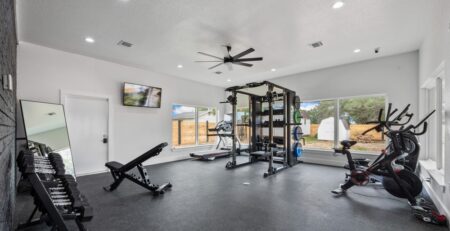
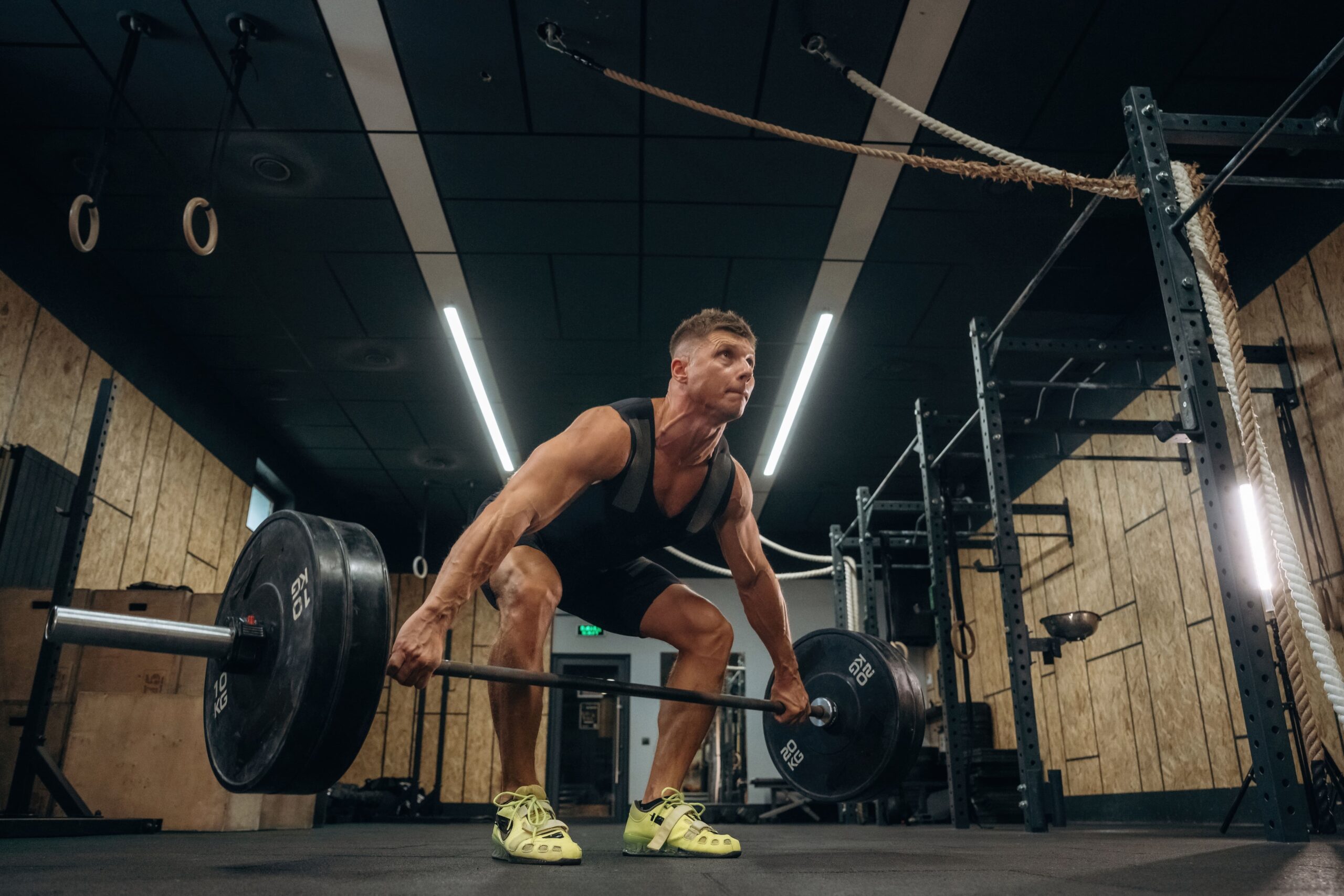
If you train with a barbell, a power rack is one of the first things to get right. Safety arms or pins matter. They give you a fail-safe when a rep stalls. That matters on squats, bench work, and other lifts where getting stuck is a real possibility.
If you use a Smith machine, make sure you understand how the catch system works before you load it. One reason solo lifters like Smith training is that it offers built-in support points throughout the movement. That can make heavy pressing, squatting, and split squats easier to manage without a spotter.
Benches matter too. Make sure the bench sits flat, does not shift, and fits your rack or Smith setup.
Check your rack and safeties before every session
This takes less than a minute, but it matters.
Before you lift, check that:
- J-hooks are locked in place
- Safety arms or pins are set at the right height
- Plates are loaded evenly
- Collars are secure
- The bench is centered
- The floor is clear around you
A lot of home gym issues come from rushed setup, not from the lift itself. If the safeties are too low, they may not help. If they are too high, they can get in the way and change the movement. Set them based on the lift and test the range before your working sets start.
Do not train to failure on every lift
This is one of the simplest ways to stay safe when you train alone.
You do not need to take every set to the point where the bar stops moving. Leave room on compound lifts, especially when you are benching or squatting without a spotter. That still lets you train hard while giving you control over each rep.
There is a place for effort, but effort and failure are not the same thing.
If you want to push harder, save that for safer movements like cable work, machine work, dumbbell accessories, or Smith machine exercises where the setup gives you more control.
Learn the bailout before you need it
Every solo lifter should know what happens if a rep goes wrong.
That means testing your rack safeties with an empty bar. It means knowing how to rotate and catch a Smith bar. It means understanding where to step on a failed squat and how to unload tension without panic.
This is not overthinking. It is practice.
The goal is to make the response automatic. When people get hurt, it is often because the first failed rep is also the first time they have thought about what to do next.
Use warm-ups to check readiness
Warm-ups are not just about getting loose. They help you check whether your body is ready to lift.
Start with a few minutes of movement. Then do lighter sets of the exercise you plan to train. Watch how the joints feel. Pay attention to bar path. Notice whether the setup feels stable.
If something feels off, adjust before the weight gets heavy.
That is especially important for solo lifters because there is no one else in the room to point out a problem with your setup or movement.
Keep your training area clear
A crowded training area creates avoidable risk.
Do not leave plates, cable handles, bands, or bars where you step in and out of lifts. Keep the area around your rack clear. Store plates on posts or a rack. Put attachments back when you finish with them.
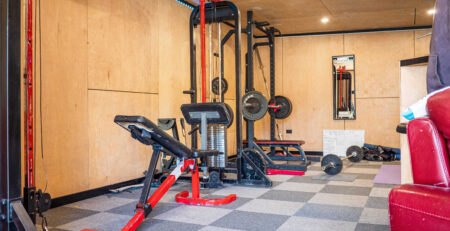
This becomes even more important in garage gyms where space is limited and you may be moving between a rack, bench, cable station, and storage wall in one session.
A clean setup makes every lift easier to manage.
Choose exercises that fit solo training
Some exercises are better suited to solo training than others. That does not mean you need to avoid big lifts. It means you need to be smart about exercise selection.
Good solo options include:
- Rack squats with safeties set right
- Smith machine bench and incline press
- Cable rows and pulldowns
- Dumbbell presses you can control into position
- Barbell lifts with a proper rack setup
Risk goes up when the setup depends on outside help or awkward positioning.
Choose movements you can start, control, and end on your own.
Train hard, but train with a plan
Solo lifting works when you build safety into the session from the start. Use the right equipment. Set the safeties. Check the floor. Know your bailout. Leave ego out of the setup.
The goal is not to make training feel limited. The goal is to remove avoidable problems so you can focus on the work.
A home gym should let you train on your terms. With the right setup, you can push hard, stay safe, and keep making progress without needing anyone else in the room.